



Choosing a Wedding Theme That is Perfect For You
July 26, 2026
Why the Japanese Garden Wedding Has Become So Popular
Most couples choose their venue first, then their decorator, then their colour palette, then their theme. Over at The Key Wedding, we've seen this order cause more rework and budget waste than any other planning mistake.
Your wedding theme is the brief that every other vendor works from. It determines the flowers your decorator orders, the lighting mood your riggers design, the backdrop your photographer needs, and the attire that makes sense for your couple portraits. When the theme comes last, every earlier decision either has to be reversed or compromises the final result.
This guide walks you through how to choose a wedding theme that works for your venue, your budget, and how you want your photos to look in ten years. Because a theme that photographs well in 2025 should still look considered in 2035. If you're already exploring concepts, our concept wedding gallery shows you what execution at a luxury level actually looks like.
What a Wedding Theme Actually Is (And What It Isn't)
Ask any decorator in Kuala Lumpur what couples are bringing to their first consultation this year, and a Japanese garden wedding comes up more than almost anything else. It's not hard to see why. After years of maximalist tablescapes and oversized floral walls, couples are asking for something quieter. A room that feels considered rather than crowded.
At The Key Wedding, we've built this theme across KL's five-star ballrooms for couples who want the calm of an outdoor garden wedding without giving up the comfort, air-conditioning, and reliability of an indoor venue.
This article walks through what a Japanese garden wedding actually involves, how it compares to a standard garden wedding Malaysia couples typically picture, and what it takes to execute well in a KL ballroom.
If you want to see the full range of what we've built, our decoration concept gallery has more.
What Makes a Japanese Garden Wedding Different
A typical garden wedding Malaysia couples request leans lush and abundant: dense floral walls, cascading installations, colour-saturated blooms in volume. It's a beautiful approach, and one we build often. A Japanese garden wedding works from a different set of principles entirely.
Japanese garden design is built on restraint, asymmetry, and negative space. Rather than filling every surface, the composition leaves room to breathe. A single sculptural branch arrangement says more than a wall of flowers.
A raked gravel motif or a still water feature does more visual work than a dozen floral clusters. The philosophy is that beauty comes from what you choose to leave out, not what you add.
Translated into a wedding, this means fewer but more considered elements: bonsai and pine as structural anchors, cherry blossom branches used sparingly and dramatically, muted natural tones (moss green, stone grey, soft blush, deep charcoal) instead of saturated colour, and clean lines in furniture and structure rather than ornate detailing. The room feels curated rather than filled.
The Core Elements of a Japanese Garden Wedding Build
Cherry Blossom and Bonsai
theknot.com
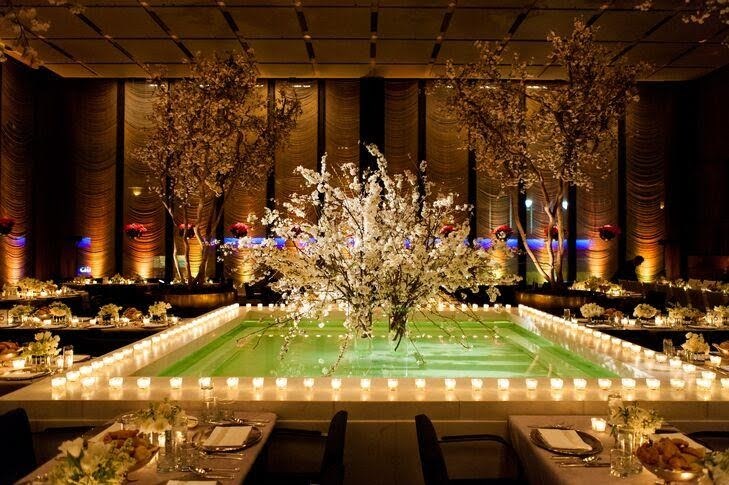
Where a standard garden wedding fills a stage with dense floral coverage, a Japanese garden build uses cherry blossom branches (sakura) as a singular dramatic gesture, typically arching over the stage or framing the pelamin from one side rather than both. Bonsai trees, real or styled, appear at the base of the stage or along the aisle as structural punctuation rather than filler.
This restraint is deliberate and, counterintuitively, more difficult to execute than a dense floral wall. Every branch placement is visible. There's no volume to hide an imperfect angle behind. Decorators who specialise in this theme spend as much time on branch selection and positioning as they would on a full floral installation for a maximalist build.
Water and Stone as Design Language
Nomad Wedding Japan
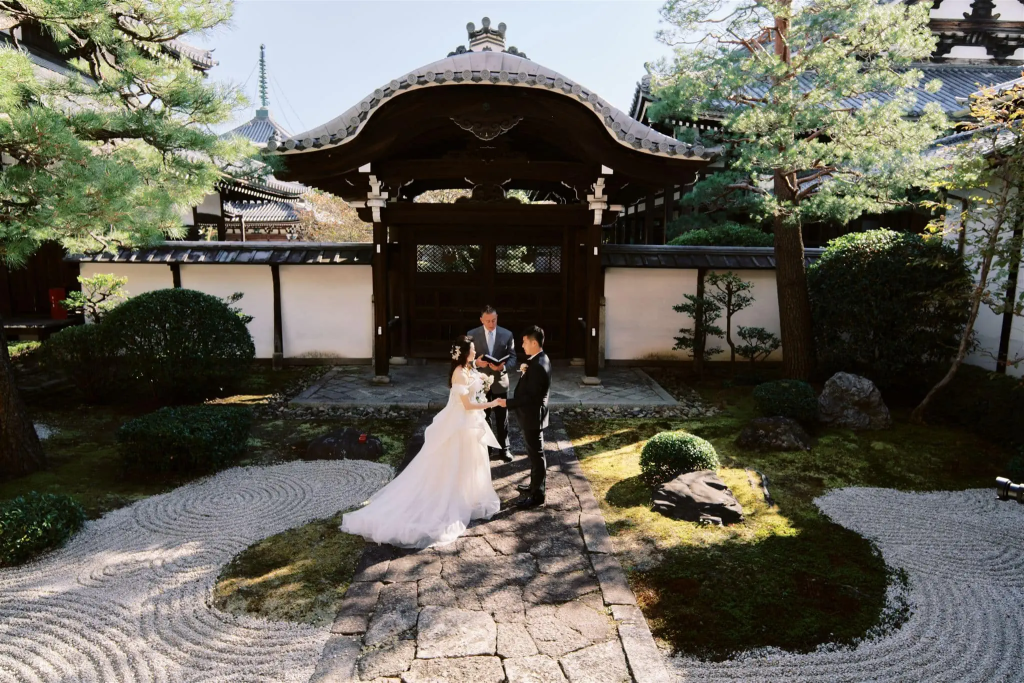
Still water and raked stone are core motifs in Japanese garden design, and the most memorable Japanese garden weddings we've built find a way to reference this indoors. A shallow reflecting pool at the entrance.
A stone pathway leading to the aisle, built from flat river stones set into a runner. These elements ground the theme in something more specific than "Asian-inspired greenery," and they photograph exceptionally well because they add a textural layer most ballroom weddings don't have.
Muted, Layered Colour Rather Than Bold Palette
Muted, Layered Colour Rather Than Bold Palette
Instead of a bold two-tone palette or vibrant floral colour, a Japanese garden wedding works in layered neutrals: moss, stone, sand, and a single accent (usually blush pink from the cherry blossom, or deep burgundy for a more dramatic evening feel). The palette is quiet by design, which puts more visual weight on texture, shape, and lighting than on colour contrast.
Lighting That Reveals Rather Than Illuminates
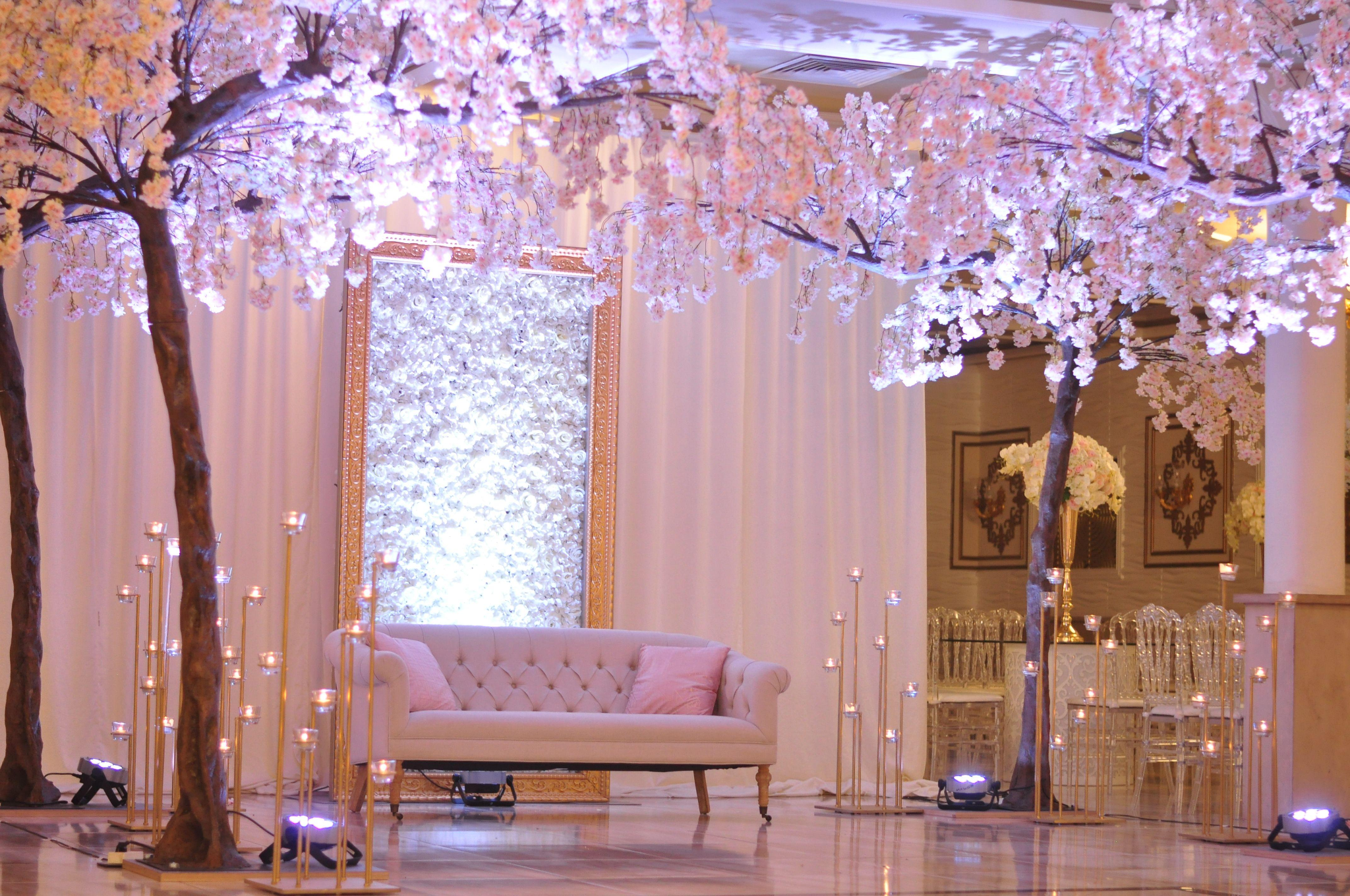
Because this theme relies on negative space and subtlety, lighting and effects carry more weight than in a denser build. Flat ambient light flattens a restrained design faster than it flattens a maximalist one, because there's nowhere for the eye to land except the few elements that are there.
A Japanese garden wedding needs precise pin-spotting on the bonsai and branch installations, soft warm uplighting to bring out the stone and wood textures, and a stage wash that creates gentle shadow rather than flat brightness. Underlighting this theme is the single most common way it falls short of its potential.
Do Japanese Garden Themes Work Best Outdoors?
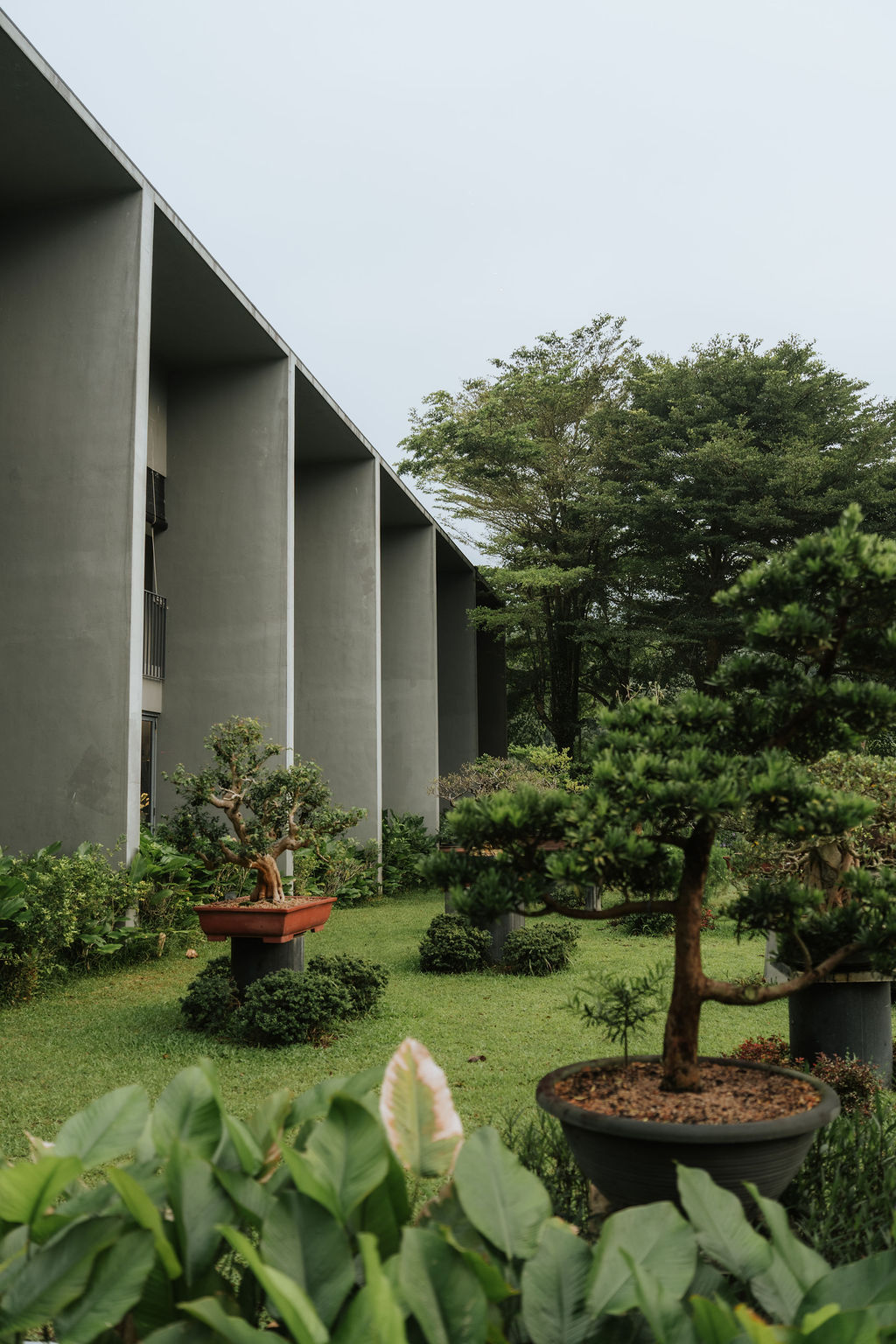
Some of the most striking Japanese garden weddings we've built have been genuine outdoor weddings, using venues with existing greenery, water features, or garden structures as a head start on the theme.
Places like KL have a handful of venues suited to this: garden estates, glasshouse venues with adjoining outdoor space, and also a small number of places near KL such as Cameron or Genting with landscaped courtyards.
An outdoor wedding however brings its own considerations. Malaysian weather means every outdoor Japanese garden wedding needs a covered contingency, either a marquee structure built into the design from the start or a fast-turnaround indoor backup plan. Lighting also behaves differently outdoors: without ceiling and wall surfaces to bounce light off, uplighting and pin-spotting need to be positioned more deliberately to avoid the design reading as dim once the sun sets.
Ballrooms with higher ceilings and minimal existing ornamentation tend to suit this theme best, since the restrained design needs a relatively neutral backdrop to read clearly. Venues with heavy existing gold detailing or ornate carpeting work against the palette rather than with it.
For couples considering a genuine outdoor or semi-outdoor build, garden estate venues and glasshouse properties or the outskirts of KL offer natural greenery that reduces the amount of structural planting a decorator needs to bring in.
How Much Does It Cost?
A Japanese garden wedding at a KL in a five-star ballroom typically costs around RM100K and above, though the spend is distributed differently: proportionally more toward structural elements and lighting, proportionally less toward table-by-table floral volume.
Couples exploring this theme should expect their decorator to spend more time in the concept and sourcing phase than in a standard build, since bonsai and blossom quality vary significantly and the wrong sourcing choice is visible in every wide shot.
Plan Your Japanese Garden Wedding
At The Key Wedding, every Japanese garden wedding we build starts with understanding the specific balance a couple wants between restraint and drama. Some couples want the quiet, negative-space version. Others want the cherry blossom moment to be bigger and bolder. Both are within the theme; the wedding concept consultation is where we work out which direction suits you.
If you're planning a garden wedding in KL and want to explore whether a Japanese garden theme suits your venue, get in touch to start with a concept consultation before committing to a space.